Creeping Marshwort, Helosciadium (formerly Apium) repens
This plant is protected under Schedule 8 of the Wildlife and Countryside Act
See also Annex 11 of the EU Habitats Directive
This plant is protected under Schedule 8 of the Wildlife and Countryside Act
See also Annex 11 of the EU Habitats Directive
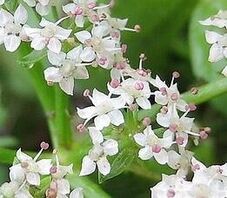
Natural England Species Recovery Programme 1995-2005 (ENRR706)
There are two parts to this document, which contains the full history of all the research carried out by members of the
Oxfordshire Flora Group (formerly called the Rare Plants Group) of the Ashmolean Natural History Society of Oxfordshire (ANHSO). Both parts can be downloaded from http://publications.naturalengland.org.uk/publication/65065
There are two parts to this document, which contains the full history of all the research carried out by members of the
Oxfordshire Flora Group (formerly called the Rare Plants Group) of the Ashmolean Natural History Society of Oxfordshire (ANHSO). Both parts can be downloaded from http://publications.naturalengland.org.uk/publication/65065
Creeping marshwort found in Norfolk by Thetford Conservation Group Eastern Daily Press, 24 Sept 2020
The plant was formally identifed by the Breckland Flora Group, Plantlife and experts from both the National History Museum and the Botanical Society of Britain and Ireland. 'The discovery is so groundbreaking that the BSBI has taken seeds from them to be planted in the Royal Botanic Gardens’ millennium seed bank at Kew in London.'
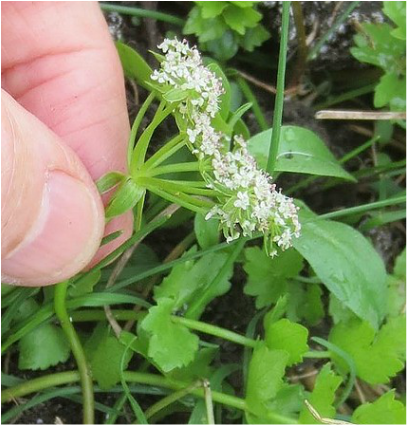
In 2020 it also reappeared on Walthamstow Marshes after a gap of 8 years 'following extensive management of the site (by cattle!)', as reported on the website of Essex Botany and Mycology Groups in September that year, together with a photo of the plant taken by Eammon Lawlow, site warden, and the observation: 'Note diagnostic characters - the peduncle 2x length of umbel rays and 5 leafy bracts at the base of the umbel. N.B. in the common Apium nodiflorum the umbels are usually almost sessile and there are only 0-3 narrow bracts'. The photo was sent to Judy Webb and Camilla Lambrick, both members of the Oxfordshire Flora Group, for confirmation. Subsequently other experts visited the site to confirm the identification.
The plant was formally identifed by the Breckland Flora Group, Plantlife and experts from both the National History Museum and the Botanical Society of Britain and Ireland. 'The discovery is so groundbreaking that the BSBI has taken seeds from them to be planted in the Royal Botanic Gardens’ millennium seed bank at Kew in London.'
In 2020 it also reappeared on Walthamstow Marshes after a gap of 8 years 'following extensive management of the site (by cattle!)', as reported on the website of Essex Botany and Mycology Groups in September that year, together with a photo of the plant taken by Eammon Lawlow, site warden, and the observation: 'Note diagnostic characters - the peduncle 2x length of umbel rays and 5 leafy bracts at the base of the umbel. N.B. in the common Apium nodiflorum the umbels are usually almost sessile and there are only 0-3 narrow bracts'. The photo was sent to Judy Webb and Camilla Lambrick, both members of the Oxfordshire Flora Group, for confirmation. Subsequently other experts visited the site to confirm the identification.
|
16 September 2022 Judy tweeted:
'The heat and drought of this summer meant that rare Creeping Marshwort Helosciadium repens had a very poor year on native site of Port Meadow (only one patch found). It is therefore good to report it thriving in historic site - seepage zone in Lye Valley fen. Introduced this spring.' Photos from 16 September and 9 February 2022 are here 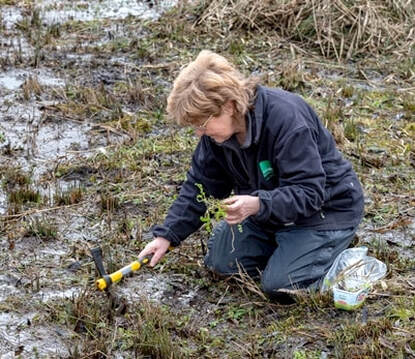
9 February 2022
Photo above: Judy introducing creeping marshwort to a spring area near a Lye Valley pond outside the SSSI area, permission having been obtained. She explained that technically this is a re-introduction, as the botanist John Sibthorp reported its presence here in the preface to his Flora Oxoniensis of 1794. The following is a translation of the Latin organised by the Oxfordshire Flora Group: Lower down in the peaty fen of Bullingdon Green* the sedge beds in summer are bright with flowers of Pinguicula [Butterwort] and Parnassia [Grass-of-Parnassus] reaching for the sun; among them even the scarcely known creeping Sium [Creeping Marshwort] can be found'. * Probably the area that includes what is now the Lye Valley SSSI. Bullingdon Green was the historic name for the higher area to the east of Lye Valley, now covered in housing estates except for Rock Edge. |
Some other tweets about creeping marshwort:
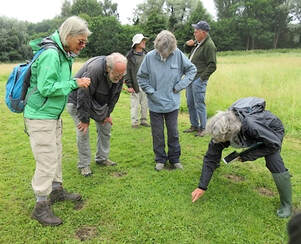
25 July 2021 Judy tweeted: 'Oxon botanists assemble for the first creeping marshwort Helosciadium repens survey in its newest intro. site of a floodplain meadow near Henley. A success - due to council close-mowing, and shearing to very short sward by the Greener Henley Wildlife Group.
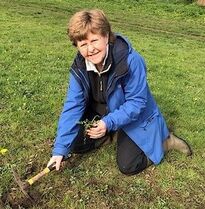
Adam Bows replied: 'Great to see it flourishing Judy! Is it time to survey the area where they were introduced at #raleighparkoxford?' See item 31 March, below Judy: 'RP is on the list, getting to it for assessment soon'. Photos taken by Judy are here 31 March 2021 Adam Bows, MSc student at Oxford Brookes University, tweeted 'Very excited as 4 Creeping Marshwort planted in Raleigh Park Oxford today, which Judy Webb grew on from stolons licensed for collection from Port Meadow by Natural England. Apium repens is Critically Endangered & only found in Oxon - hope they settle in'. Photos below by Adam, who, following the successful completion of his dissertation for the degree of Master of Conservation Ecology, was appointed Catchment Officer for The Freshwater Habitats Trust
|
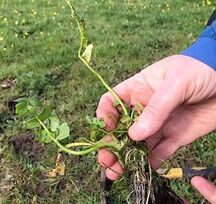
3 September 2020 Port Meadow survey found only 12 patches of creeping marshwort, struggling in dense grass/silverweed, and few flowers. Two introductory sites had a better showing, with abundant flowers and seed formation - see Judy's photos from 27 August (link below) showing the Freshwater Habitats Trust pond margin site, where more plants from cultivated stock, sourced from Port Meadow under licence in 2017, have been planted out.
|
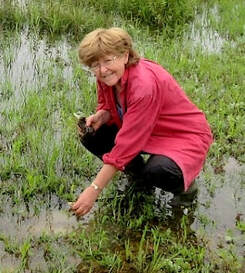
27 August 2020 Cutteslowe Ponds, Oxford
Judy is seen here introducing some creeping marshwort plants to the ponds. She explained in her tweet of 3 September, 'I am taking just the runners from the plants, digging a slit in the wet clay and inserting the runners so a couple of nodes are buried. These now can grow away before winter river flooding'. Helosciadium (formerly Apium) repens is one of the species for which she is Flora Guardian within the Oxfordshire Flora Group Photos here |
|
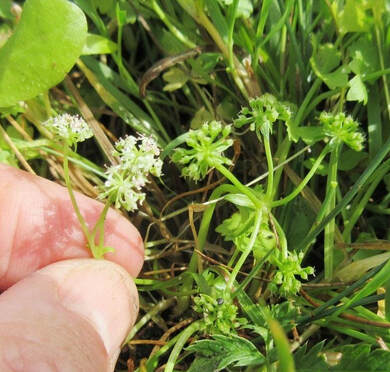
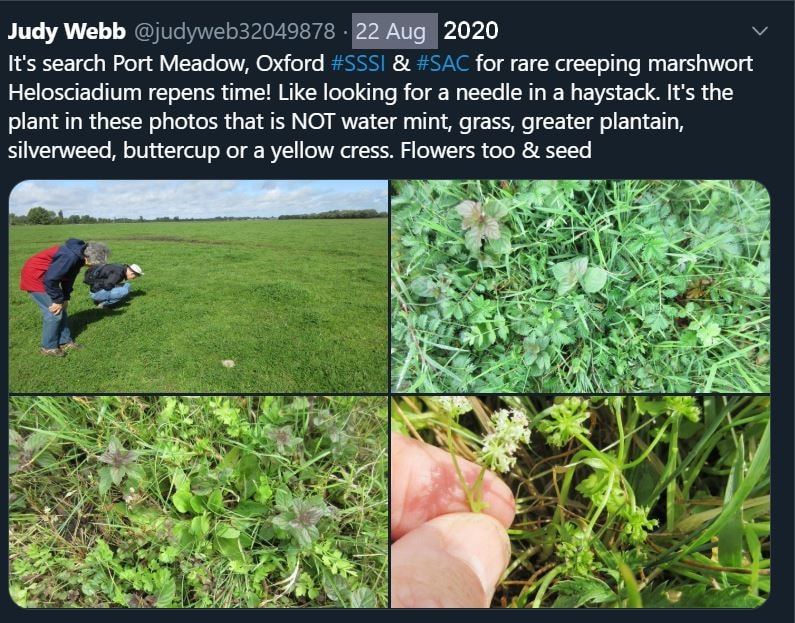
Creeping marshwort, Port Meadow, Oxford, 22 August 2020
|
Below: update on Creeping Marshwort tweeted by Judy on 26 November 2019
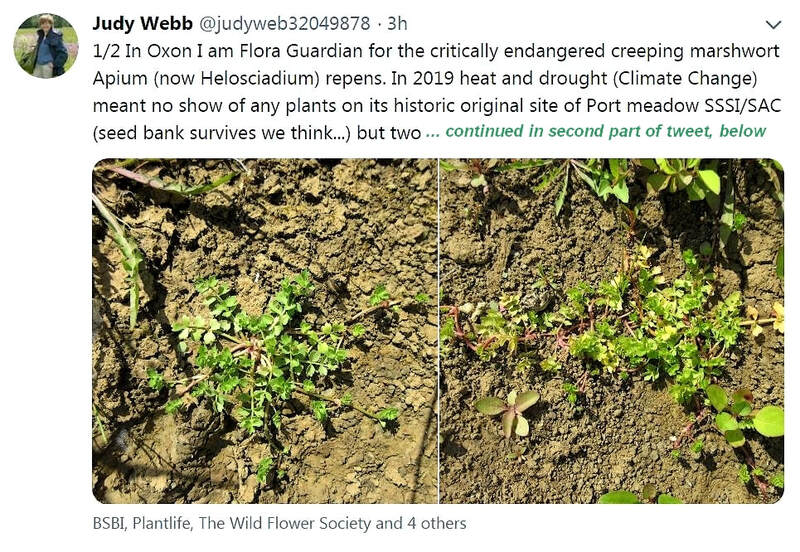
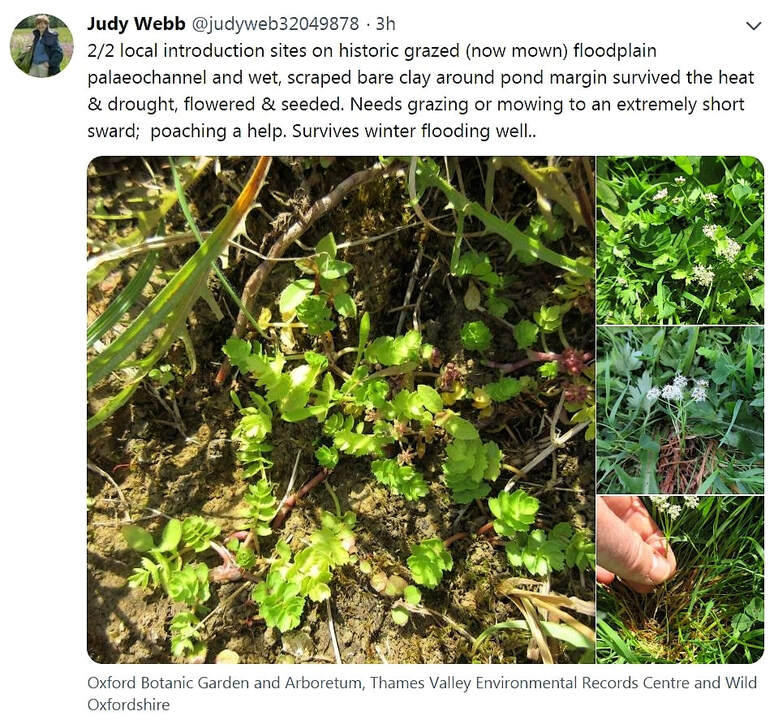
|
Dr Judy Webb's report, Feb. 2014: Port Meadow and Wolvercote Common - Informal Wildlife Report on Observations 2006-2013
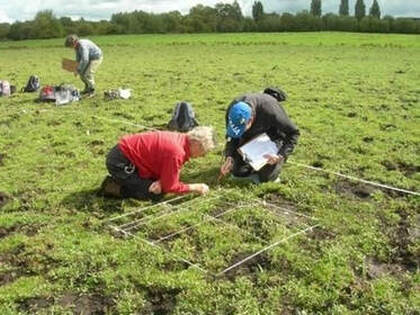
Photo by Judy Webb shows the ANHSO Rare Plants Group (now the Oxfordshire Flora Group) recording creeping marshwort in the 12m x 30m permanent quadrat, South Port Meadow, 2011 a) Report + Appendices 1 and 2 (pdf file) See page 8 of report for CM b) Appendices 3 and 4: Wolvercote Common & Port Meadow records (pdf) c) Appendix 5: Photographs of Port Meadow by Judy Webb (pdf ) d) Appendix 6: Photographs of Wolvercote Common by Judy Webb (pdf) |
Above: The ANHSO Rare Plants Group (now the Oxfordshire Flora Group) recording Creeping marshwort in the 12m x 30m permanent quadrat, South Port Meadow, 2011 Photo by Judy Webb
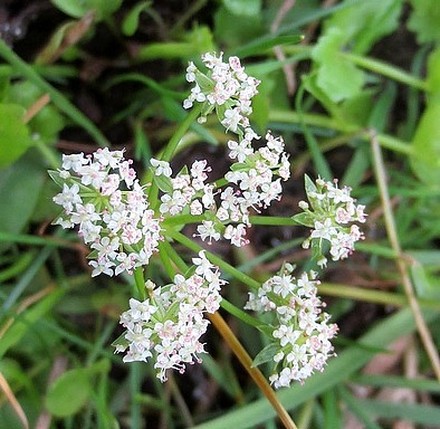
Below: Creeping Marshwort, Helosciadium repens, (formerly known as Apium repens) in Port Meadow, Oxford
Photos below taken by Judy Webb
Photos below taken by Judy Webb
|
|
